
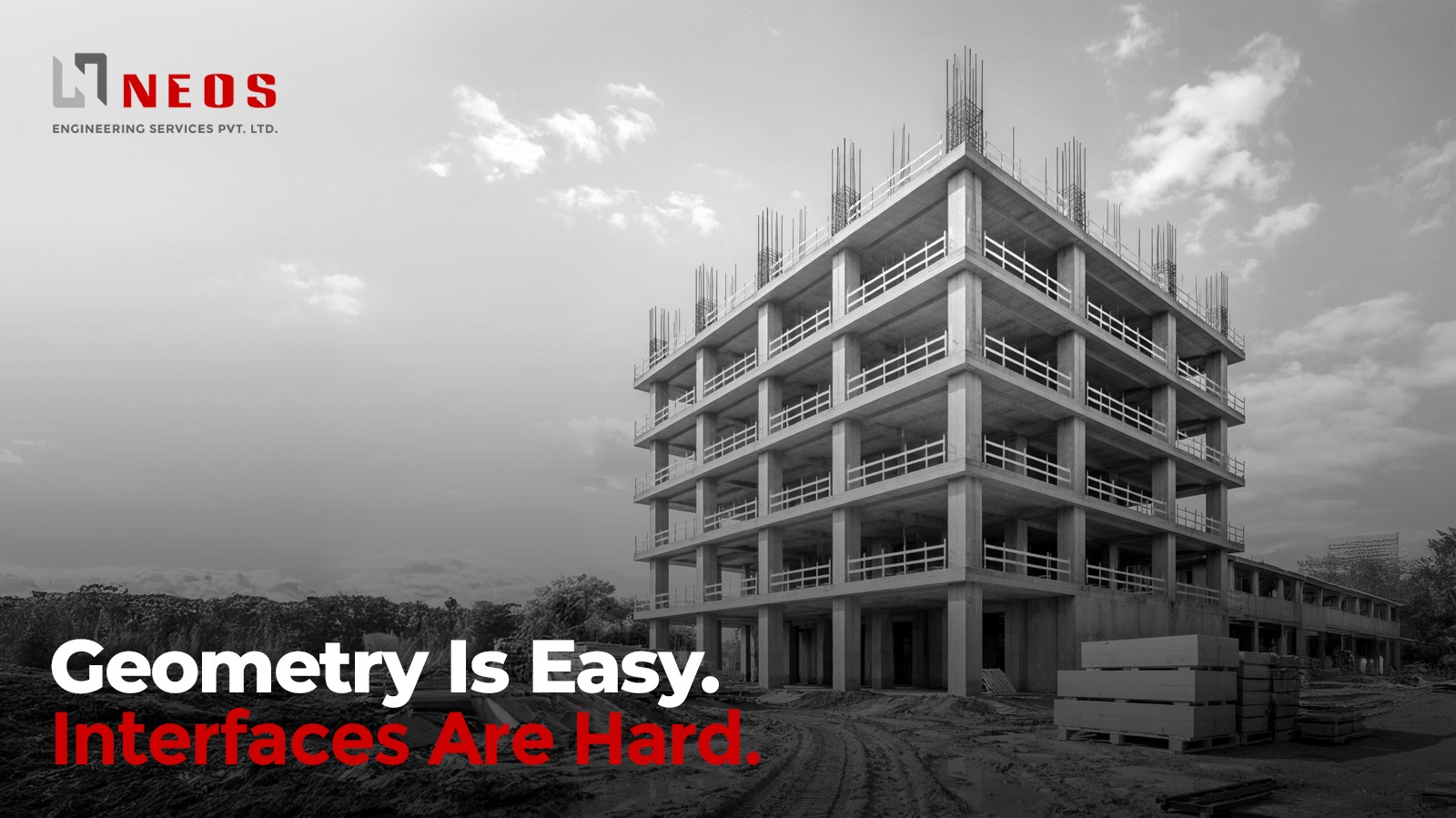
Precast construction is widely hailed for its speed and efficiency, as well as the ability to produce items with great precision. At first glance, precast construction appears straightforward. Items such as walls, beams, slabs, and columns are designed to be produced in controlled environments, delivered to the site, and then assembled quickly (relative to conventional methods). Essentially, it may appear to operate as a plug-and-play type of construction; that is, the separate items simply ‘plug’ into one another, thus forming the completed assembly.
Anyone who has been involved in precast engineering for any length of time knows that the above description does not paint an accurate picture of the true nature of the precast construction process.
The greatest challenge associated with precast construction is not the modelling of the various precast products. In actuality, when most precast products are isolated from their environment, they are relatively simple to conceptualise and design and, therefore, structurally straightforward; e.g., a beam is simply a beam, a wall panel is simply a wall panel, and a slab is simply a slab.
The difficulty associated with precast is derived from the interaction between the products. The most complicated aspect of precast is the engineering associated with interface design. That is, the locations where the various precast products assemble, transfer load from one product to another, and must physically interact during the actual installation process. It is in these locations that engineering judgement, precision, and coordination become extremely important.
Where Precast Projects Actually Become Complex
A precast beam by itself does not usually create major issues. The same is true of a wall panel or a slab. Each of these components can be relatively easily modelled and manufactured. However, once these components have to connect with other elements, the complexity of the connection or interface increases substantially.
Some of the most critical or high-risk interfaces in precast projects include:
1. Beam-to-column seating connections
2. Wall panel joints/vertical alignment
3. Slab-to-beam bearing conditions
4. Pocket foundations/grout zones
5. Embed plates connecting precast to steel structures
Each of these interface points has to support structural loads, installation tolerances, and actual construction conditions. Even though a connection may appear correct on a drawing or BIM model, if the factors outlined above are not adequately coordinated, the connection may fail during the installation process. This is why so many precast challenges show up only during the erection phase of the project – long after the components have been fabricated.
Why Interfaces Are the Real Engineering Work
There are many technical constraints to be addressed when detailing interfaces between precast concrete components (elements). A beam-to-column connection is an example. On the surface, this may seem simple. However, it must resolve several engineering requirements at the same time:
– The structural load transfer between the two elements
– The minimum intended bearing length of the connection
– The locations of the hardware of the connection
– The gap size for grout placement to accommodate the tolerances
– The anchorage and continuity of the reinforcement
– Access for welding or bolting during construction
If any one of these factors is not carefully considered, problems can arise during construction. Common problems resulting from improperly detailing these interface connections include:
– Misalignment of elements during erection
– Excessive shimming is required to compensate for tolerances.
– Grinding or modifying elements on-site
– Delays resulting from a request for information (RFI)
– Temporary fixes could compromise the long-term performance of the connection.
Most of these problems do not arise from the modelling of isolated precast elements but from the need to connect the precast elements together at the construction site.
Why Interface Detailing Requires Engineering Judgement
Today’s technology has changed the way BIM software is able to assist in coordinating projects and can help with clash detection. Digital models are able to give you a visualisation of how your structural, architectural and MEP systems will work together prior to the commencement of construction. However, the software alone cannot determine the entire constructability of a model. A BIM model could be completely clash-free; however, it could still have hidden interface risks, such as the following:
– Not having enough grout space between components
– Having weld locations that will not be accessible for installation
– Having unrealistic tolerance assumptions will affect field conditions.
– Having an excess of bars within connection zones
In order to address these issues, you will need more than just automated modelling. It will take engineering judgement, experience, and a disciplined review process. In this instance, precast detailing is where drafting becomes a specialised form of applied engineering.
How NEOS Approaches Interface Engineering
We believe that the most important element for precast detailing is the interface coordination between components. Rather than solely focusing on modelling the individual elements, we also consider how they interact with each other during both precast factories and the erection (installation) of the components.
Typically, our process will consist of:
– Confirming compatibility with connection details before finalising the geometry of an element.
– Verifying that the tolerance of the components will work together when they are installed with one another.
– Confirming that the erection and installation process has been reviewed and confirmed during the modelling phase of the other elements being connected to one another.
– Verifying that the connection zones will be buildable under actual field conditions.
By addressing these types of concerns early in the detailing phase, we are able to eliminate unforeseen costs to our clients.
The Engineering That Makes Precast Work
The use of precast construction allows for quick and efficient construction but depends on careful planning and coordination for success. While the shapes of precast pieces may seem simple, the difficult part lies in the interfaces between the structural components, connections, reinforcement, and embedded items, and how they affect the fabrication and installation processes. If the precast detailing and coordination are not done correctly, delays and issues can occur when setting the precast pieces on-site. The precast detailing group at NEOS Engineering Services concentrates on both the constructability of the project and the coordination of the group. Our team will detail precast elements with consideration of how the elements will be fabricated and installed in the real world. Therefore, there are no complicated interfaces – we provide solutions for building interfaces that are simple and predictable for builders to construct.