
Introduction
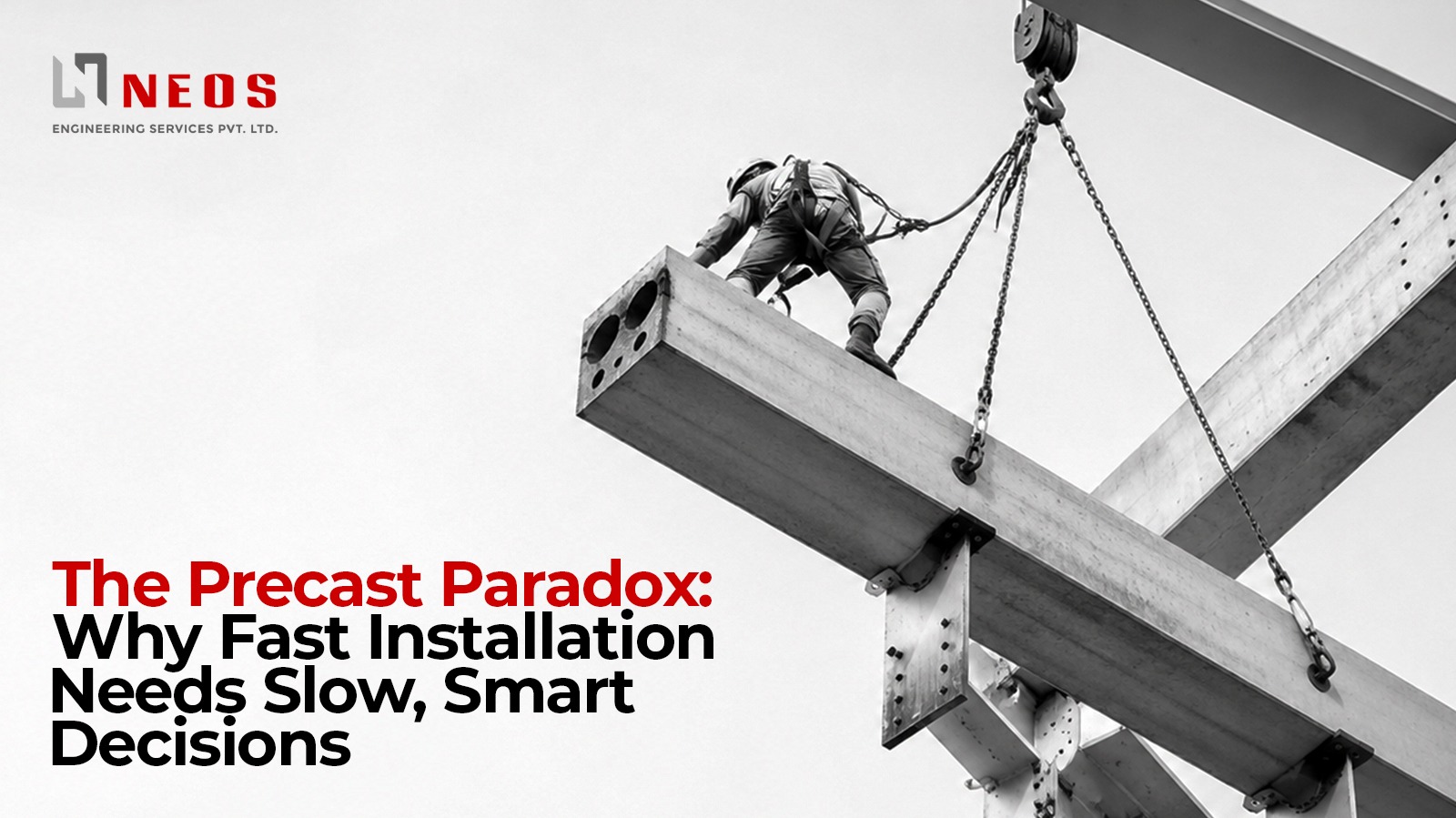
Precast construction is widely known for its speed. Structural elements arrive at the site, are lifted by cranes, and within minutes a building begins to take shape. To many observers, the process appears effortless and highly efficient, almost like assembling ready-made components.
However, what is not visible in this rapid installation is the extensive planning and engineering work completed beforehand. Weeks of coordination, technical decisions, and preparation take place before a single element reaches the site.
This contrast between fast installation and careful preparation forms the core of what can be called the Precast Paradox. Behind every quick installation lies a long process of planning, detailing, and coordination.
Why Precast Looks Simple (But Isn’t)
At first glance, precast construction appears straightforward. Components are engineered, fabricated in a controlled manufacturing environment, and then transported to the construction site for installation.
In reality, each precast component must satisfy several requirements before it can be produced and installed successfully. Every element must:
• Work properly with adjacent structural elements
• Meet structural load requirements
• Be fabricated efficiently in the factory
• Be transported safely to the site
• Be handled properly during lifting operations
• Be installed accurately during erection
If any of these requirements are overlooked, serious challenges may arise later. What appears to be a simple installation is actually the result of extensive coordination and planning.
Installation Is Quick. Decisions Are Slow
A precast wall panel can often be installed within minutes. However, the decisions that make this installation possible may take weeks to complete.
During the detailing and coordination stage, several critical aspects must be addressed, including:
• Connection design
• Embed and insert positioning
• Reinforcement detailing
• Tolerance specifications
• Lifting and handling design
If these decisions are rushed or incomplete, the impact will usually appear on site. At that stage, resolving problems becomes far more difficult and costly.
What Happens Before Casting Begins
Before fabrication can begin, several important aspects must be resolved during the detailing phase.
Connection Considerations
Connections must be structurally reliable, safe, and practical to install during erection. Poor connection planning can lead to installation delays.
Embed Coordination
Embedded plates, inserts, and anchors must be carefully coordinated with reinforcement and other components to avoid clashes.
Tolerance Planning
Construction sites rarely provide perfect conditions. Tolerance allowances must be incorporated so elements can fit properly during installation.
Erection Sequence Planning
The order of installation must be carefully considered to ensure that cranes and workers maintain proper access throughout the process.
Lifting and Transportation Design
Precast elements must be designed to withstand the forces experienced during lifting, handling, and transportation.
Although these considerations may not be visible during installation, they are essential for achieving smooth and efficient construction.
Factory vs Site: Two Different Worlds
Precast construction operates across two very different environments.
In the Factory
• Activities are carefully planned and scheduled
• Production processes follow defined sequences
• Tools and materials are prepared in advance
• Manufacturing operations are repeated and optimized
This controlled environment allows elements to be produced with high precision and consistency.
On the Construction Site
• Weather conditions may be unpredictable
• Site space may be limited
• Crane access may be restricted
• Multiple construction teams may work simultaneously
A design that performs well in the factory may encounter difficulties on site if these conditions are not considered during detailing.
For this reason, successful precast detailing must account for both factory conditions and site constraints.
The Importance of Detailing in Precast Construction
Detailing plays a critical role in the precast process. It connects conceptual design with practical construction.
Detailing is not simply a drafting activity. It involves anticipating potential challenges and resolving them before fabrication begins.
Detailers must consider:
• How reinforcement will be positioned and secured
• How embedded components will interact with other systems
• Whether connections are accessible during installation
• How elements will behave during lifting and transportation
High quality detailing ensures that precast elements are ready for fabrication and installation without unexpected complications.
What Happens When Planning Is Not Enough
When important decisions are not resolved during the early stages, problems tend to appear during installation.
Common issues include:
• Misalignment between adjacent elements
• Conflicts between reinforcement and embeds
• Unsafe or difficult connection installations
• Project delays caused by poor erection sequencing
These problems reduce construction efficiency and increase project costs. More importantly, they undermine the primary advantage of precast construction, which is speed.
Effective planning and detailing are essential to avoid these issues.
How NEOS Addresses the Precast Paradox
At NEOS, we believe that successful precast construction begins with thorough preparation and careful coordination.
Our services include:
• Detailed shop drawings
• Accurate reinforcement detailing
• Effective embed and connection coordination
• Practical construction planning
• Sequence based detailing
Our approach begins at the design stage and continues throughout the construction process.
By resolving critical details early, we help reduce risks and improve installation efficiency.
Conclusion
The speed and quality associated with precast construction are not accidental. They are the result of careful planning, detailed engineering, and thorough coordination carried out long before installation begins.
What appears to be fast construction on site is supported by weeks of preparation behind the scenes.
Efficiency should not be confused with speed. True efficiency means completing work correctly, without delays or unnecessary rework.
At NEOS, we understand that successful precast projects begin with clear detailing and well-informed early decisions. By addressing critical aspects before casting begins, we help ensure that every project moves smoothly from design to installation.
In precast construction, rapid progress on site is only possible when the right decisions are made long before the concrete is poured.