
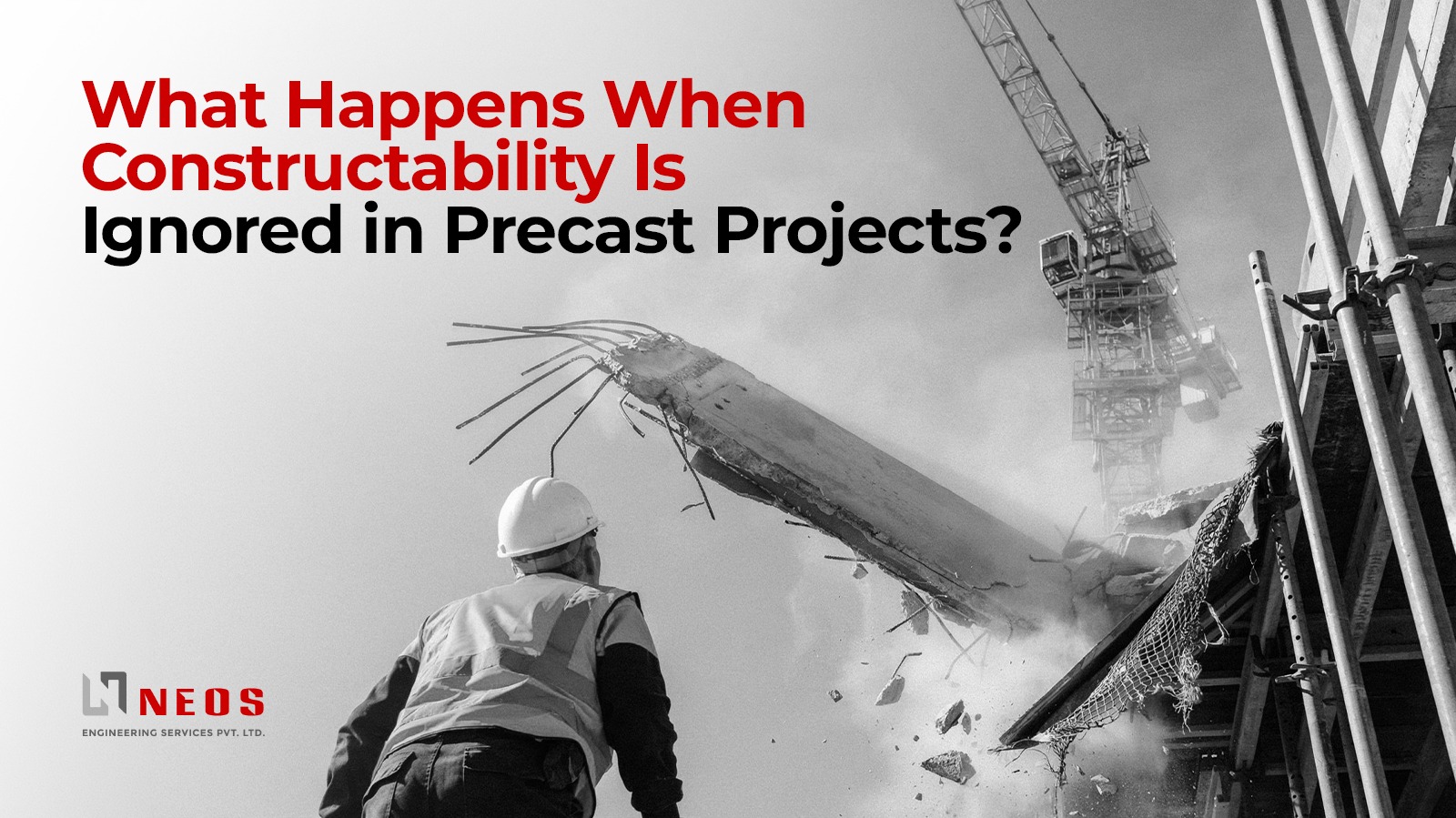
Precast construction is often praised for its speed, quality control, and efficiency. Projects can move faster, site activities can be reduced, and production can be managed in a controlled factory environment. However, the success of any precast project depends on more than accurate structural design and detailed drawings.
A design may satisfy structural requirements, meet code provisions, and appear flawless in a digital model. Yet if it cannot be manufactured, transported, lifted, or installed efficiently, the project can quickly encounter delays, cost overruns, and coordination challenges.
This is where constructability becomes critical.
Constructability is the process of ensuring that every engineering decision supports practical execution in the real construction environment. When constructability is overlooked, problems that seem minor during design often become major obstacles during production and installation.
Understanding Constructability in Precast Construction
Constructability refers to the integration of construction knowledge and practical site considerations into the design and detailing process.
In precast projects, constructability extends beyond structural calculations. It involves evaluating how each component will move through the entire project lifecycle, including:
- Manufacturing
- Storage
- Transportation
- Lifting
- Installation
- Final connection and finishing
Every element must not only perform structurally but also function efficiently during execution.
A wall panel that meets structural requirements may still create challenges if it exceeds transportation limitations. Similarly, a connection detail may appear technically correct but become impossible to install due to restricted site access or reinforcement congestion.
Ignoring these practical realities creates risks that often remain hidden until construction begins.
The First Warning Sign: Production Challenges
Many constructability issues emerge during fabrication.
Precast elements are manufactured using carefully planned moulds, reinforcement layouts, inserts, embeds, and lifting systems. When detailing does not consider production requirements, fabrication teams often face unexpected complications.
Common examples include:
- Congested reinforcement arrangements
- Conflicting embed locations
- Difficult concrete placement zones
- Inaccessible lifting hardware
- Excessively complex mould configurations
These issues can slow production, increase labour requirements, and affect manufacturing efficiency.
In some cases, elements must be redesigned after production planning begins, causing disruptions that impact project schedules long before installation starts.
Transportation Problems That Could Have Been Prevented
Transportation is one of the most overlooked aspects of precast engineering.
A panel may fit perfectly within the digital model, but transporting it safely to the site introduces a completely different set of challenges.
Engineers must consider:
- Trailer capacities
- Road restrictions
- Turning radiuses
- Bridge clearances
- Weight limitations
- Loading and unloading procedures
When transportation constraints are ignored, elements may require redesign, splitting into smaller units, or specialized transport arrangements.
These changes increase costs and introduce delays that could have been avoided through early constructability reviews.
Successful precast projects are designed not only for structural performance but also for efficient movement from factory to site.
Installation Delays and Site Disruptions
The most visible consequences of poor constructability often appear during installation.
By the time precast elements arrive on-site, project schedules are tightly coordinated. Crane operations, labour resources, logistics teams, and follow-on trades all depend on smooth installation sequences.
When constructability has not been adequately considered, installation teams may encounter:
- Misaligned connection points
- Inaccessible fixings
- Insufficient erection tolerances
- Lifting difficulties
- Clash issues between adjacent elements
- Unsafe installation conditions
What appears to be a minor detailing oversight can halt installation activities and disrupt multiple project stakeholders.
In many cases, site teams are forced to develop temporary solutions under schedule pressure, increasing both risk and project costs.
The Hidden Impact of Tolerance Accumulation
Tolerance management is a critical component of constructability.
Every precast element is manufactured within accepted dimensional tolerances. While these variations may appear insignificant individually, they can accumulate across multiple elements.
This phenomenon, known as tolerance stacking, can create significant alignment problems during installation.
Potential consequences include:
- Uneven façade lines
- Misaligned connections
- Inconsistent joint widths
- Installation difficulties
- Additional site modifications
Without proper tolerance planning, even accurately manufactured components may fail to fit together as intended.
Constructability reviews help engineers identify these risks early and develop realistic tolerance strategies before production begins.
Coordination Failures Between Disciplines
Modern construction projects involve multiple disciplines working simultaneously.
Structural engineers, architects, MEP consultants, precast detailers, manufacturers, and contractors all contribute to the final outcome.
When constructability is overlooked, coordination gaps often emerge between these stakeholders.
Common examples include:
- Structural embeds conflicting with MEP systems
- Architectural requirements affecting installation access
- Reinforcement layouts interfering with connection hardware
- Temporary lifting arrangements conflicting with permanent components
These conflicts often remain hidden until fabrication or installation begins.
Resolving them at that stage is significantly more expensive than identifying them during design coordination.
Effective constructability reviews create opportunities to detect and eliminate such issues before they impact project execution.
Increased Costs Across the Project Lifecycle
Many project teams view constructability as an additional engineering effort.
In reality, ignoring constructability is often far more expensive.
Poor constructability can lead to:
- Redesign costs
- Manufacturing delays
- Additional transportation expenses
- Crane downtime
- Site rework
- Labour inefficiencies
- Extended project schedules
Each issue may appear manageable in isolation. However, when multiple constructability problems occur simultaneously, the cumulative financial impact can become substantial.
Projects rarely fail because of one major mistake.
More often, they suffer from a series of smaller decisions that did not fully consider how the design would be executed in practice.
How Constructability Reviews Prevent Problems
The most successful precast projects treat constructability as an integral part of engineering rather than a final verification step.
Constructability reviews evaluate key project factors such as:
- Manufacturing feasibility
- Transportation requirements
- Lifting and handling strategies
- Installation sequencing
- Connection accessibility
- Tolerance management
- Multi-disciplinary coordination
These reviews help identify risks before they become construction problems.
By addressing potential challenges early, project teams can improve efficiency, reduce uncertainty, and support smoother project delivery.
The NEOS Approach
At NEOS, constructability is considered throughout the detailing and coordination process.
Every project is evaluated not only for engineering accuracy but also for practical execution. Our teams focus on developing detailing solutions that support manufacturing efficiency, transportation feasibility, installation safety, and site coordination.
By integrating constructability into the engineering workflow, potential challenges can be identified early, reducing project risks and supporting successful execution.
Because in precast construction, the question is not simply whether a design works.
The real question is whether it can be built, transported, lifted, and installed efficiently in the real world.
And when constructability is ignored, that is often where problems begin.