
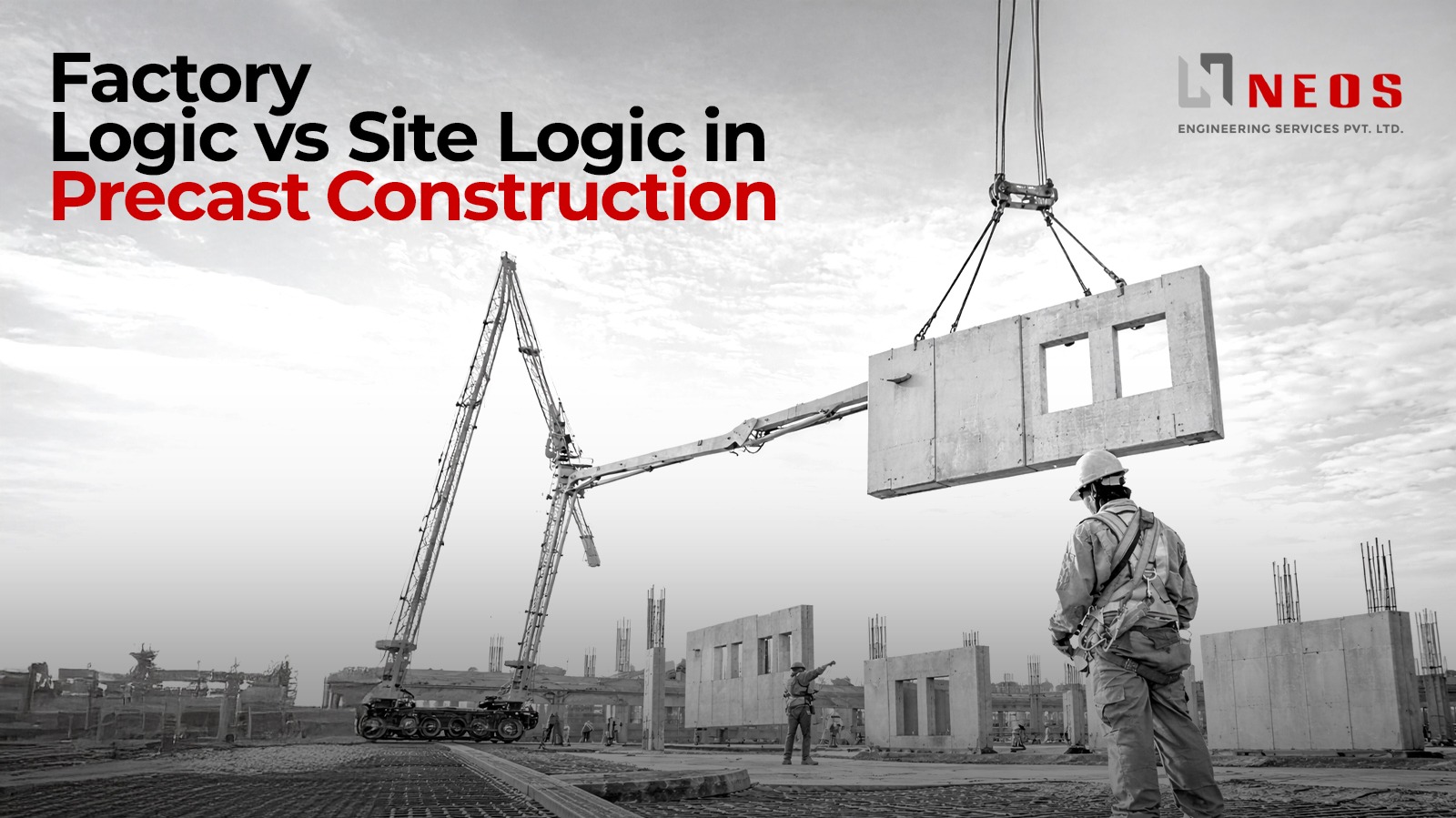
There is a common belief that the use of precast construction is simply the assembly of pre-manufactured components. Many people believe that once the structural components are designed, they are manufactured within a factory setting and then delivered to the job site and erected like a puzzle. However, precast construction actually operates in two distinct environments: one is the controlled conditions of manufacturing in a factory, while the other is the unpredictable nature of erecting precast components on the job site. In order for detailed drawings to work successfully on a precast project, it is imperative to maintain a balance between these two different environments; this ensures that the design process will transition smoothly into the construction phase.
Understanding the Difference Between Factory and Site Environments
A precast facility has a high degree of focus on efficiency, repetition, and controlled cycle times when producing products within its facility. Specific production processes are planned and developed to ensure an ongoing workflow throughout the overall production schedule. Casting beds will have scheduled time frames for production, moulds will be prepared long before being cast, and the fabrication of reinforcement cages will precede the placement of concrete. Each phase of production will be established to create an environment that minimises disruption to production and allows for continued production without disruption.
Conversely, construction sites occur under conditions that can be much less consistent and often chaotic. For example, the weather can change quickly; cranes could have poor access due to buildings that surround them; and space to install structural components could be limited. Further complicating this is that multiple trades often need to work together to complete tasks, so the sequencing of construction can be impaired. Given all of the variables that affect the completed project at the factory, this same factory drawing may not go so smoothly upon being installed at the job site.
How Manufacturing Constraints Influence Precast Design
The design of precast elements needs to take into account how practical and efficient they will be to manufacture. Even if a structural design is properly engineered, there can still be difficulties in producing that element if the production of it is not performed in an efficient manner in the factory where it will be created.
Some factors influencing the practical production of precast elements include the manner in which the mould is to be prepared for casting and when the mould is to be stripped of the element so no damage occurs to either the element or the mould itself. The design of the reinforcement cage must allow for easy assembly within the mould and for placing it easily into position for casting. The placement of connection plates, lifting anchors and inserts must be coordinated to avoid possible conflicts during the casting process.
In addition to the above, the finished surface of the element and how it will be cast are also important factors to consider. Some shapes of precast elements may require special preparation of the mould and/or the finished assembly of the mould to complete the casting process. Likewise, if an excessive number of pieces of reinforcement are used in the cage, assembly will take longer to complete, resulting in an overall decrease in production efficiency. Thus, all of these practical considerations will affect how precast elements are detailed for efficient production in the factory.
Site Installation Brings Another Layer of Complexity
Installation poses an entirely different set of constraints after elements have been manufactured successfully. Crane reach and lifting capacity must be considered when positioning precast components by site teams; thus, the installation sequence will need to be planned so that each element can be placed in a manner to safely and effectively allow for subsequent components to still be accessible.
During installation, alignment tolerances become critical. The precast elements need to fit properly with adjacent structural components to allow for any minor amount of variation that might happen during the course of construction. It may also require temporary support until permanent connections are installed, and it would be necessary to have sufficient access for workers to safely assist with the connection work being done.
If these site-related factors are not addressed during the detailing phase, installation teams could encounter difficulties when installing the elements or completing the connecting process. Consequently, delays, unanticipated adjustments and further coordination efforts will occur on-site.
The Role of Detailing in Connecting Factory and Site Logic
The relationship between factory and site production is bridged by precast detailing. This process involves detailing the various elements that are to be manufactured, shipped, and ultimately installed. The detailer must account for all aspects of the element throughout its entire life cycle, from how it will be manufactured at the factory to how it will be transported to the project site to how it can be efficiently installed in conjunction with established scheduling.
Failing to take all stages into account can result in substantial risk to the overall project. If a design considers only structural calculations, the design will likely encounter constraints when manufactured; conversely, if the design is only reinforced for efficiency at the factory, the design will likely encounter issues during installation.
Successful precast solutions incorporate the needs of both the factory and site environments, thereby creating a balance within both entities.
How NEOS Bridges the Gap Between Factory and Site
NEOS uses a well-defined process when it comes to the design of precast elements and their intended use both in the factory and upon arrival at the job site. The professionals analyse each precast concrete unit as part of the overall project by evaluating its structural requirements and how it will function through all phases of construction.
Examples of this are evaluating manufacturing feasibility, evaluating the constructability of the reinforcing steel and the method for providing access for connections and accommodating the pre-planned installation schedule. By addressing these factors early in the precast detailing process, we can help to alleviate difficulties during the production process, eliminate issues at the job site, and generally improve the overall efficiency of the project.
Conclusion
The efficiencies provided by precast concrete due to the combination of the efficiency of a factory and quick installation at the job site are apparent; however, these efficiencies can only exist if there is coordination between the two environments. The complexity of precast construction blends the logical flow in the factory with the reality of the job site through careful planning and engineering. By considering this balance, NEOS is able to facilitate the transition of a precast element from a factory to a finished state of installation. Moreover, we have illustrated through our use of detailing that there are a few examples where a precast element can be installed with a “plug and play” action. Instead, successful precast installations are the result of careful and complete detail integration.